Source wooden cheese board set for kitchen, household, and serving
Explore 30 listings for the wooden cheese board set, comparing options made from acacia, rubber wood, and bamboo. Buyers can evaluate features like eco-friendly design, knife types, and customization availability for various kitchen and household applications.
Key considerations
Products List






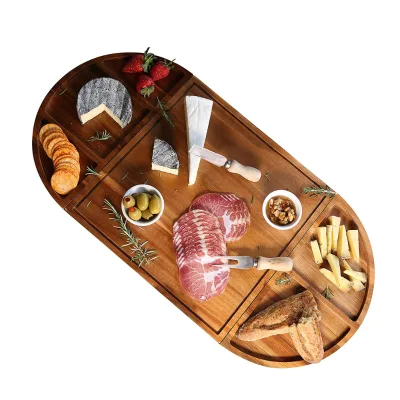
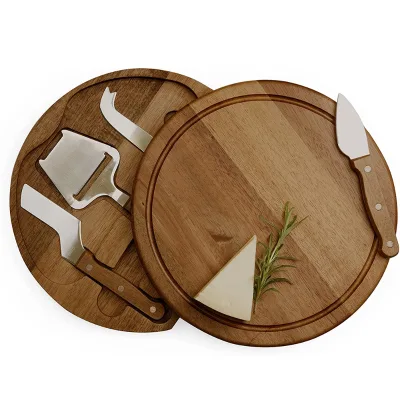
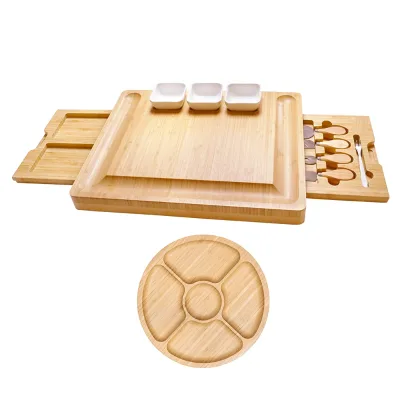

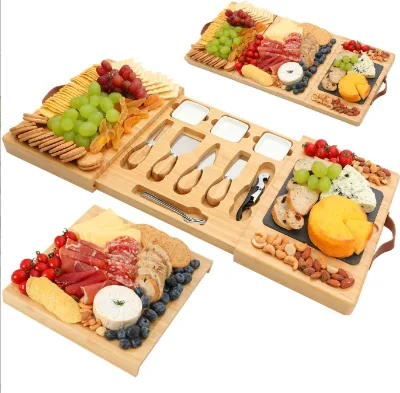

Comprehensive Sourcing Guide
Strategic Sourcing Guide for Wooden Cheese Board Sets
The global demand for premium kitchenware has elevated the wooden cheese board set from a simple serving accessory to a centerpiece of culinary presentation. For B2B procurement professionals, sourcing these items requires a nuanced understanding of material science, regulatory compliance, and supply chain logistics. The market offers a diverse array of options ranging from acacia and rubber wood to bamboo, each presenting distinct advantages and challenges. This guide provides a structured approach to navigating the procurement landscape, ensuring that buyers select products that meet both functional requirements and safety standards without relying on unverified claims.
Material Selection and Technical Specifications
The foundation of any high-quality cheese board set lies in the choice of raw materials. The observed market data indicates a prevalence of acacia wood, rubber wood, and bamboo. Acacia wood is frequently cited for its durability and aesthetic appeal, often featuring a dark khaki or natural carbonized finish. Technical specifications for these boards typically include dimensions around 20x20x3.5cm, with a thickness of 3.5cm ensuring structural integrity during use. The density of the wood is a critical factor, with some products listing a density of 680kg/M3, which suggests a tight grain structure resistant to warping. Moisture content is equally vital; successful products maintain a moisture level between 8% and 10%, a range that prevents cracking in varying humidity conditions.
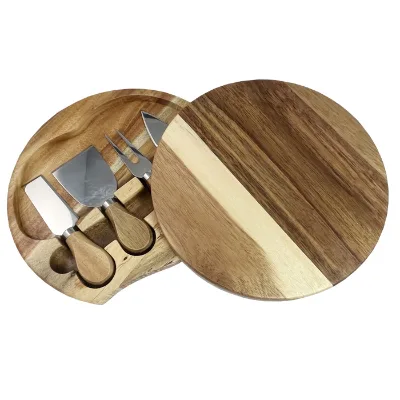
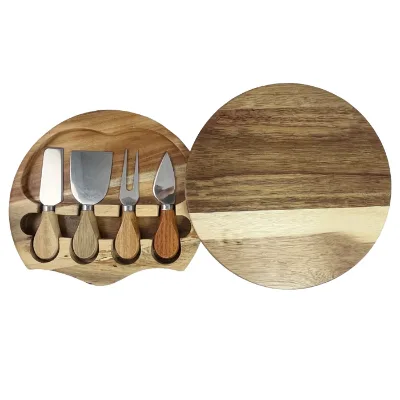
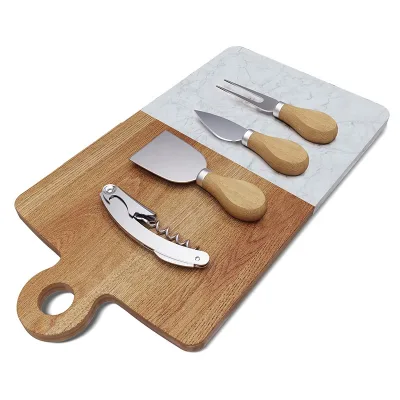
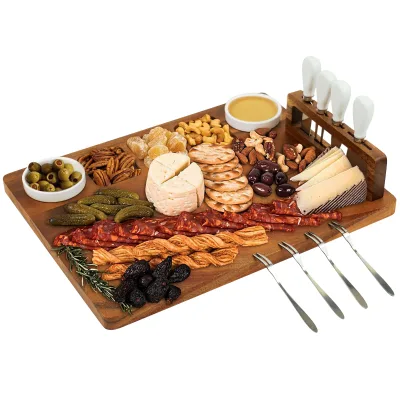
Knife components are equally important to the set's functionality. The knife material is often a composite of stainless steel and the same wood used for the board, such as acacia wood handles. Knife sizes are generally standardized, with blades measuring approximately 13cm. The design of the knife tip varies, with options including triangle cheese knives for hard cheeses and flat cheese knives for softer varieties. Some sets feature innovative designs, such as magnetic attachments that allow the knife to be stored securely on the board, enhancing the user experience. Buyers must verify that the wood used is A Grade, ensuring minimal defects and a consistent finish. The shape of the board also dictates its application; while round shapes are common for aesthetic presentation, rectangular options are available for different serving styles.
Compliance and Certification Verification
In the food contact sector, regulatory compliance is non-negotiable. Procurement teams must rigorously verify that suppliers possess valid certifications for the target markets. The supplied data highlights FDA and LFGB certifications as common standards, alongside CE/EU compliance. These certifications indicate that the materials used do not leach harmful substances and are safe for direct food contact. However, buyers should not assume that every listed product automatically satisfies these standards. It is essential to request current, valid certificates for each specific batch or production run.
The certification process often involves testing for heavy metals, formaldehyde emissions, and migration of substances into food simulants. While some background knowledge suggests FSC certification as a marker of sustainability, this should not be treated as a guaranteed attribute of every product unless explicitly confirmed by the supplier. Instead, buyers should inquire about the origin of the wood and the sustainability practices of the manufacturer. The place of origin, such as Guangdong, China, or Jian'ou, China, can influence the regulatory landscape, as different regions may have varying levels of enforcement and inspection rigor. Ensuring that the product meets the specific legal requirements of the destination country is a primary responsibility of the sourcing team.
Cost Drivers and Pricing Dynamics
Understanding the cost structure of wooden cheese board sets is crucial for budgeting and margin analysis. The observed price range in the market spans from $0.20 to $26.00 USD, a wide variance that reflects differences in material quality, craftsmanship, and packaging. Several factors drive these costs. The type of wood is a primary determinant; acacia and rubber wood may carry different price points depending on availability and processing requirements. The complexity of the design, such as the inclusion of magnets or custom logos, adds to the manufacturing cost.
Packaging also significantly impacts the final price. Options range from simple shrinkage wrapping to more elaborate white box packaging or carton boxes with pallets for bulk shipping. The "Combination Package" mentioned in some listings suggests a bundled approach that may offer economies of scale. Additionally, the Minimum Order Quantity (MOQ) plays a role in unit pricing. The observed MOQ range is between 2 and 1000 pieces. Suppliers with higher MOQs, such as those requiring 1000 pieces or more, may offer lower unit costs due to optimized production runs. Conversely, suppliers with lower MOQs might charge a premium for flexibility. Buyers must balance the desire for lower unit costs against the need for inventory flexibility and cash flow management.
Typical Applications and Market Segmentation
Wooden cheese board sets serve multiple applications, ranging from household use to commercial catering and retail gifting. The primary application identified is for cheese boards used in the kitchen, specifically for serving and preparing cheese. The "Eco-Friendly" and "Sustainable" attributes appeal to environmentally conscious consumers, making these products suitable for retail chains focusing on green living. The "Food Safety" feature is a critical selling point for households and professional kitchens alike.
The versatility of the product allows for customization, with options for logos and specific designs. This makes the sets ideal for corporate gifts, wedding favors, or promotional items. The "Wholesale" nature of some listings indicates a strong B2B market where bulk orders are common. The design features, such as the round or rectangular shapes, cater to different aesthetic preferences and serving needs. For instance, round boards are often preferred for their classic look, while rectangular boards might be better suited for buffet-style service. Understanding the specific use case helps in selecting the right product specifications and materials for the target demographic.
Supplier Evaluation and Quality Control
Evaluating suppliers requires a multi-faceted approach that goes beyond price comparisons. Buyers should assess the supplier's production capabilities, quality control processes, and ability to meet customization requests. The "Customization: Available" attribute suggests that many suppliers are willing to adapt products to specific buyer needs, such as adding logos or altering dimensions. However, this flexibility must be balanced with the supplier's ability to maintain consistent quality.
Quality control should be a continuous process, not just a final inspection. Buyers should verify that the supplier adheres to strict standards for wood density, moisture content, and finish quality. The "A Grade" designation is a positive indicator, but it should be backed by tangible quality assurance protocols. Inspecting the surface for rough edges, ensuring the magnets are securely attached, and verifying the sharpness and balance of the knives are essential steps. Additionally, the packaging method, whether shrinkage or white box, must be robust enough to prevent damage during transit. Suppliers should provide samples for pre-shipment inspection to ensure that the final product matches the agreed-upon specifications.
Long-Term Procurement Considerations
Sourcing wooden cheese board sets is not a one-time transaction but a long-term relationship that requires strategic planning. Buyers should consider the scalability of their orders and the supplier's ability to handle volume fluctuations. The "Selling Units: Single item" attribute indicates that the product is often sold individually, which can simplify inventory management but may increase per-unit shipping costs. For larger orders, the "Carton Box + Pallet" packaging option becomes more relevant for efficient logistics.
Sustainability is a growing concern in the procurement landscape. While specific FSC claims should be verified, buyers should prioritize suppliers who demonstrate a commitment to sustainable forestry and ethical labor practices. The "Eco-Friendly" and "Sustainable" attributes are marketing points that resonate with modern consumers, but they must be substantiated by the supplier's actual practices. Furthermore, the "Customized" standard allows for future product evolution, enabling buyers to adapt to changing market trends without switching suppliers. Establishing clear communication channels and setting realistic expectations regarding lead times and production schedules will ensure a smooth procurement process. By focusing on these long-term factors, buyers can build a resilient supply chain that delivers value and quality over time.
Comparative Analysis of Product Attributes
To facilitate decision-making, the following table summarizes key attributes observed in the market for wooden cheese board sets. This comparison highlights the diversity in materials, designs, and certifications available to buyers.
| Attribute Category | Option A: Acacia Wood Set | Option B: Rubber Wood Set | Option C: Bamboo Set |
|---|---|---|---|
| Board Material | Acacia Wood | Rubber Wood | Bamboo |
| Knife Material | Acacia Wood + Stainless Steel | Acacia Wood + Stainless Steel | Stainless Steel |
| Board Shape | Round | Rectangle | Common |
| Board Size | 20x20x3.5cm | 20.5x19x3cm | Common |
| Thickness | 3.5cm | 3cm | Varies |
| Certifications | FDA, LFGB, CE/EU | FDA, LFGB | Varies |
| Packaging | Shrinkage / White Box | White Box | Carton Box + Pallet |
| Key Features | Eco-Friendly, Durable | Food Safety, Household | Waterproof, Flame Retardant |
| MOQ Range | 2 - 1000 | 1000 PCS up | Varies |
This table illustrates that while core functions remain similar, the specific material and certification profiles vary significantly. Buyers must align these attributes with their specific market requirements and regulatory obligations. The presence of features like "Waterproof and Flame Retardant" in bamboo sets suggests unique selling points that may differentiate them from traditional wood options. Ultimately, the choice depends on the buyer's specific needs regarding durability, aesthetics, and compliance.
Final Procurement Recommendations
In conclusion, sourcing wooden cheese board sets requires a balanced approach that integrates technical knowledge with strategic supplier management. Buyers must prioritize material quality, ensuring that the wood meets specific density and moisture standards to guarantee longevity. Compliance with food safety certifications like FDA and LFGB is mandatory, and these should be verified through direct documentation rather than assumed from product descriptions. Cost considerations should be weighed against the value of customization and packaging quality, with attention paid to MOQ constraints that may affect unit pricing.
By maintaining a focus on quality control and long-term supplier relationships, buyers can secure a steady supply of high-quality cheese board sets that meet the demands of their customers. The diversity of options available, from acacia to bamboo, offers flexibility in product selection, but it also necessitates careful evaluation of each supplier's capabilities. Through diligent research and adherence to the standards outlined in this guide, procurement professionals can navigate the complexities of the market and deliver superior products to their end users.
FAQs
What materials are used for wooden cheese board sets?
These sets typically use acacia wood, rubber wood, or bamboo for the board. The knives often combine stainless steel with acacia wood handles. Buyers should verify the specific material grade, such as A Grade, to ensure durability and food safety compliance.
Which certifications ensure food safety for these boards?
Common certifications include FDA, LFGB, and CE/EU compliance for food contact safety. These standards verify that materials do not leach harmful substances. Buyers must request valid certificates for each batch rather than assuming all listed products meet these specific regulatory requirements.
How does the MOQ affect the unit price?
The minimum order quantity ranges from 2 to 1000 pieces depending on the supplier. Higher MOQs, such as 1000 pieces, often result in lower unit costs due to optimized production runs. Lower MOQs provide flexibility but may carry a premium price per unit.
Can buyers request custom logos on the boards?
Yes, customization is available for adding logos to the wooden cheese board sets. Suppliers offer options for different shapes like round or rectangular boards. Buyers should confirm the customization process and any associated costs before placing a bulk order.
What are the typical dimensions for these cheese boards?
Standard board sizes are often around 20x20x3.5cm with a thickness of 3.5cm. Knife sizes are generally about 13cm long. Specific dimensions like 20.5x19x3cm are also available, so buyers should check the exact specifications required for their serving needs.
How are the sets packaged for shipping?
Packaging options include shrinkage wrapping, white boxes, or carton boxes with pallets for bulk orders. Some listings mention a combination package for bundled efficiency. The packaging method impacts the final price and must be robust enough to prevent damage during transit.
Where are these wooden cheese board sets manufactured?
Products originate from locations such as Guangdong, China, and Jian'ou, China. The place of origin can influence regulatory compliance and shipping logistics. Buyers should verify the specific origin to ensure it meets their destination market's import requirements.